Research
High-elevation species are genetically and physiologically adapted to survive the extreme cold and oxygen scarcity (hypoxia) found in alpine environments. But as accelerated climate warming is predicted to push species ranges upward, we lack an understanding of how upward shifts will affect organismal physiology, performance, and survival. Elevational migrants—species that make seasonal roundtrip movements between elevations—offer a unique window into these adaptive mechanisms, as they often show pronounced flexibility in oxygen transport in response to the environmental shifts they experience each season. By connecting genotype to phenotype across populations that experience different magnitudes of seasonal elevational shift, my work aims to reveal how local adaptation and phenotypic plasticity shape climate resilience, and to help forecast how alpine species will fare under predicted environmental change.
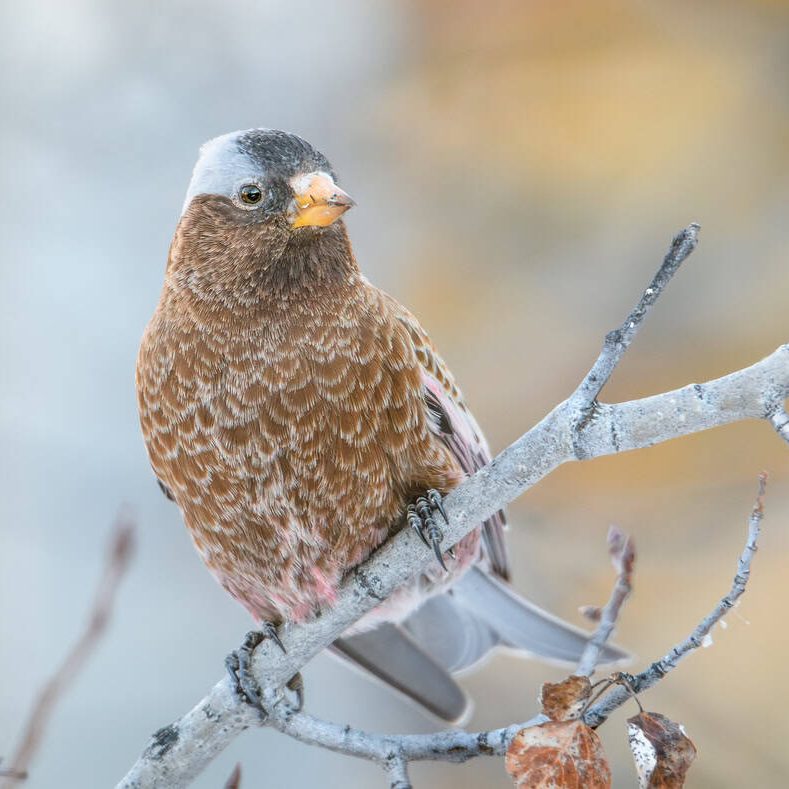
Rosy-Finch Migration and Local Adaptation
My ongoing doctoral work highlights interior populations of Gray-crowned Rosy-Finch (Leucosticte tephrocotis tephrocotis) as a model system for relating elevational migration and local adaptation. As L. t. tephrocotis are both latitudinal and elevational migrants, we are able to capture and track individuals across multiple wintering populations and examine their migratory trajectories, elevational shifts, genetics, and physiology. This integrative work provides new information on species life histories across the full annual cycle in addition to comparative insights into functional population divergence.